The Research Experiences for High School and Undergraduate Students (REHU) program of the P30 Center for Genetics, Genomics, and Epigenetics of Substance Use Disorders in Outbred Rats provided participants with an opportunity to work on summer research projects with their mentors in one of the Center-affiliated laboratories. In addition, REHU students attended a journal club and presented their work at a symposium.
The dates for the program were June 15 – August 4, 2026.
Questions? Please contact Dr. Polesskaya (opolesskaya@ucsd.edu).
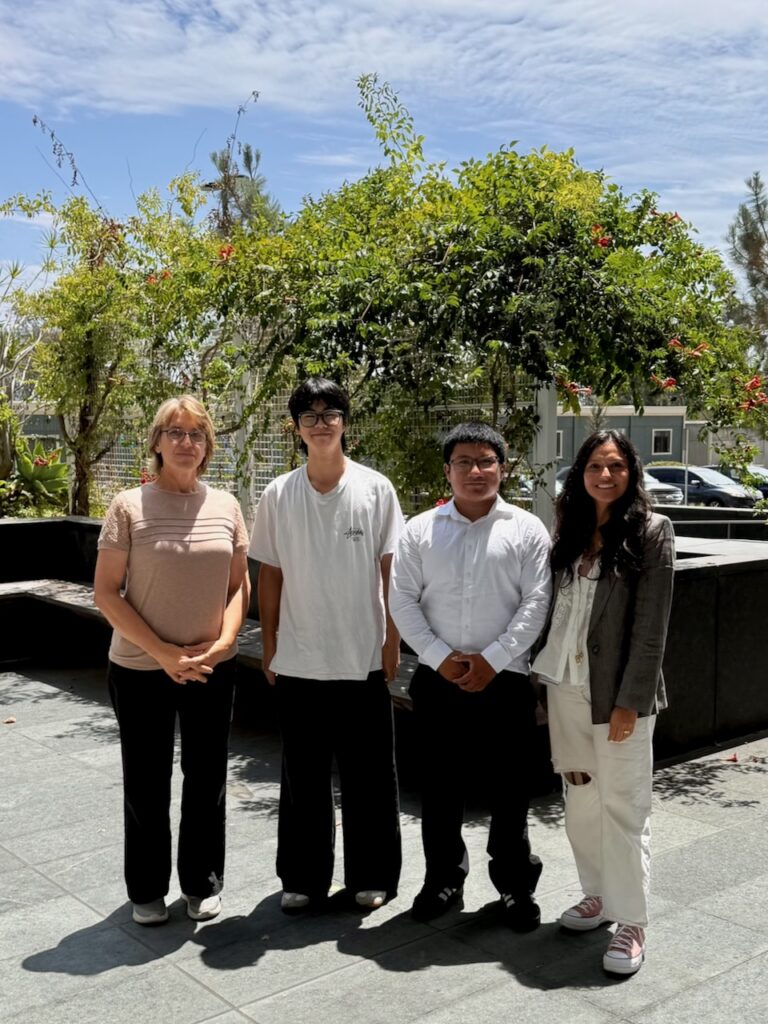
2026 REHU group – pictured from left: Oksana Polesskaya (REHU mentor and P30 Co-I), Yeng Zheng, Christopher Santiago Reyes, and Montana Lara (Palmer Lab postdoc and REHU mentor)
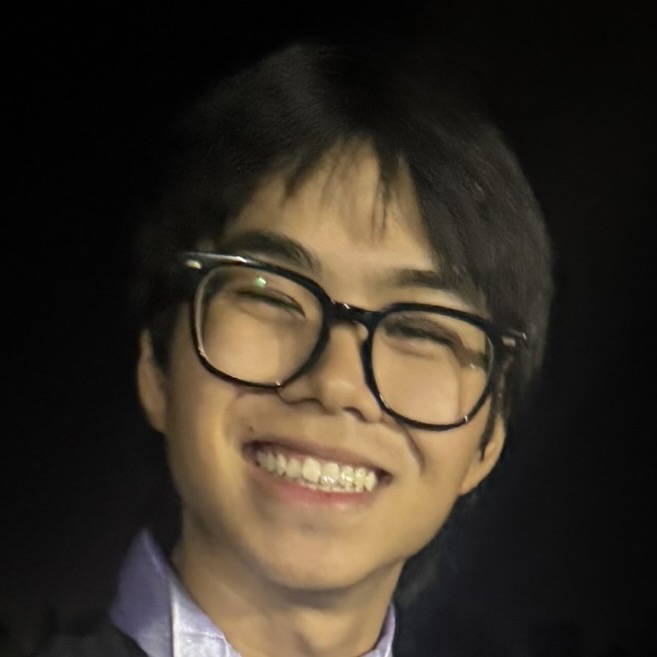
Jian (Yeng) Zheng
Undergraduate, San Diego Mesa College (Biology and Engineering)
Participant in the Math Engineering Science Achievement (MESA) and Mesa Impactship Program (MIP)
Yeng worked with an updated dataset on age-related hearing loss in CFW mice. His project focused on reviewing the data, creating visualizations in Python, performing quality-control checks, and preparing the dataset for genome-wide association analysis. During this work, Yeng identified an outlier that affected the overall data pattern, identified the underlying issue and fixed it. After the GWAS was completed by senior staff, Yeng reviewed the analysis report and learned to interpret association plots, genotype-effect plots, and other components of the results. His work helped him explore how both age and genetic variation contribute to hearing loss, including evidence supporting PRKAG2 as a candidate causal gene. He also participated in the REHU journal club, where he read and discussed three research papers on behavioral genetics.
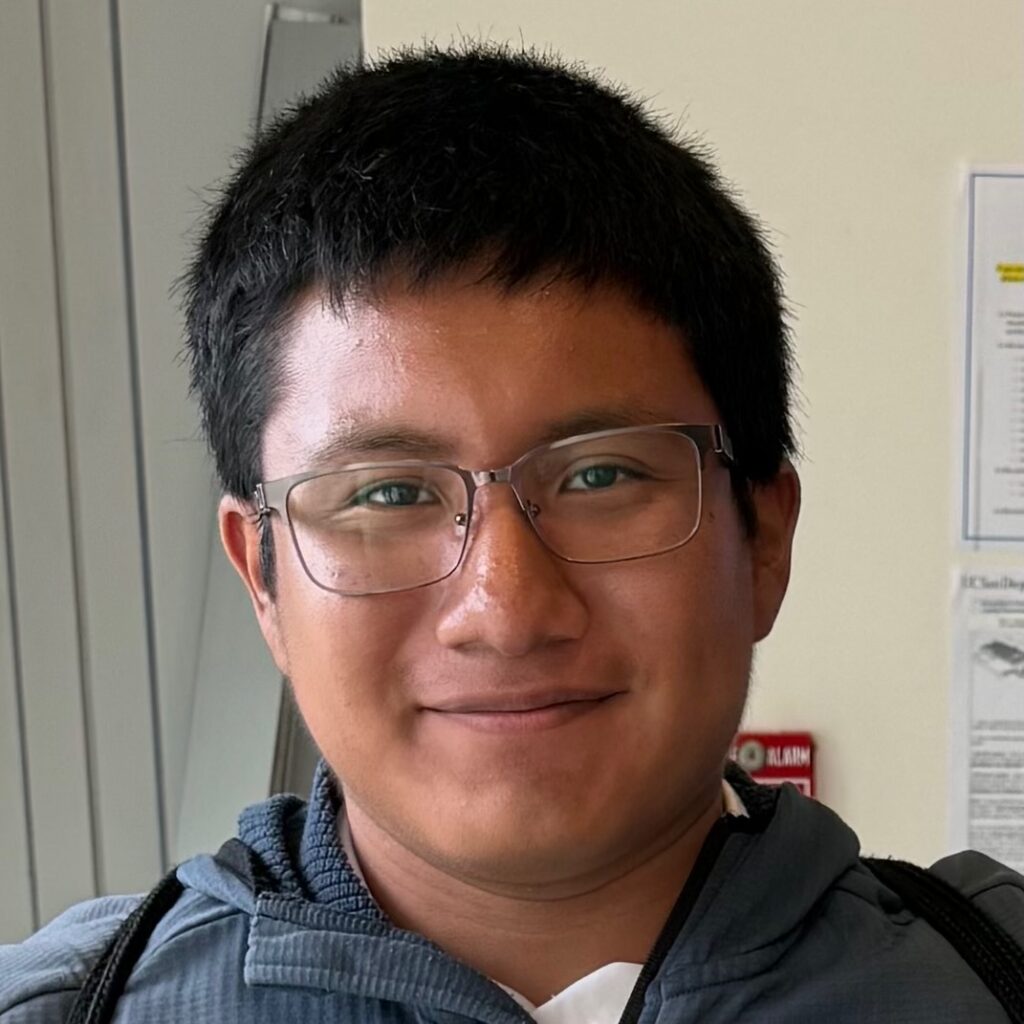
Christopher Santiago Reyes
Senior, The Preuss School at UC San Diego
Research Mentorship Program
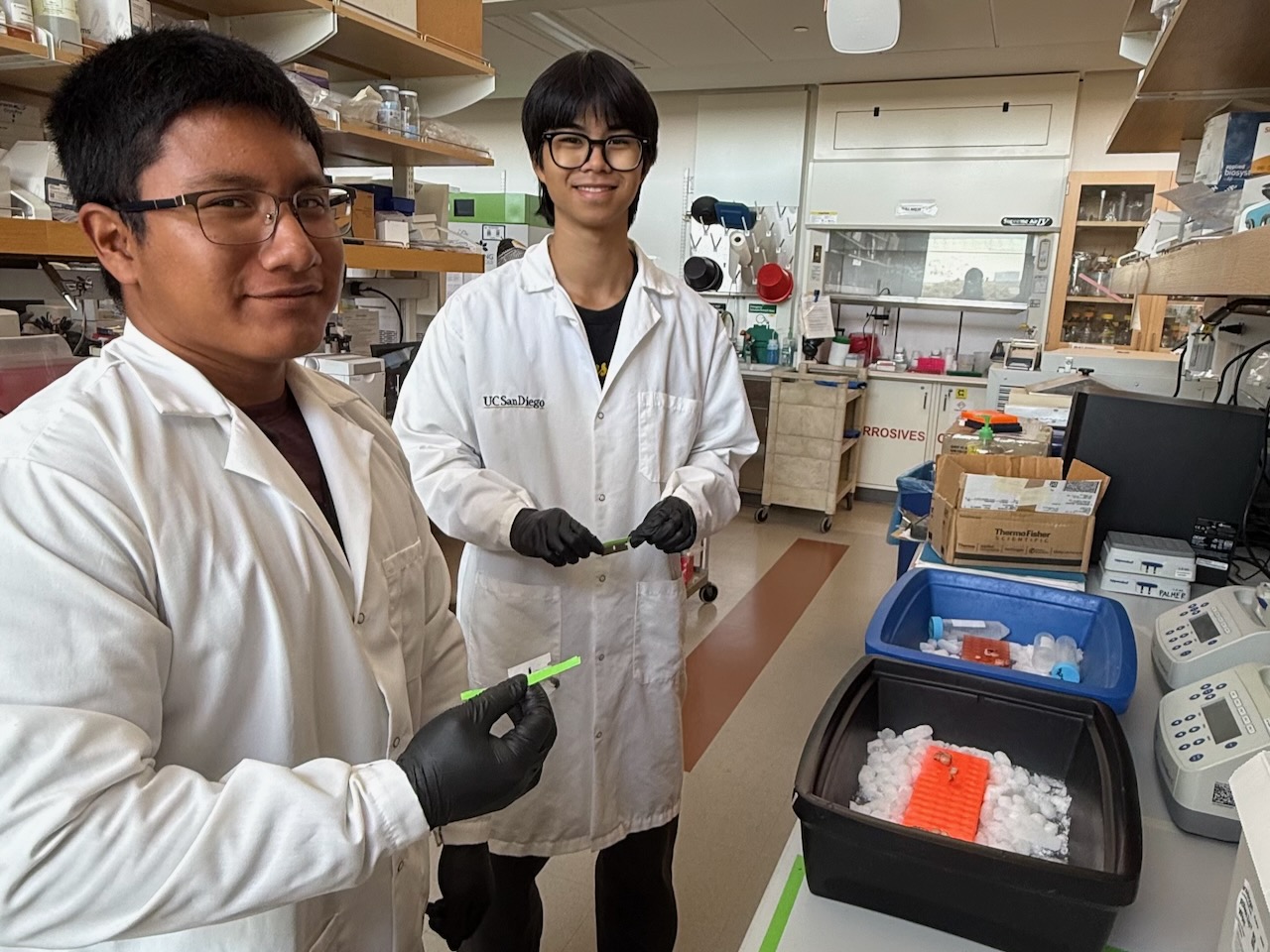
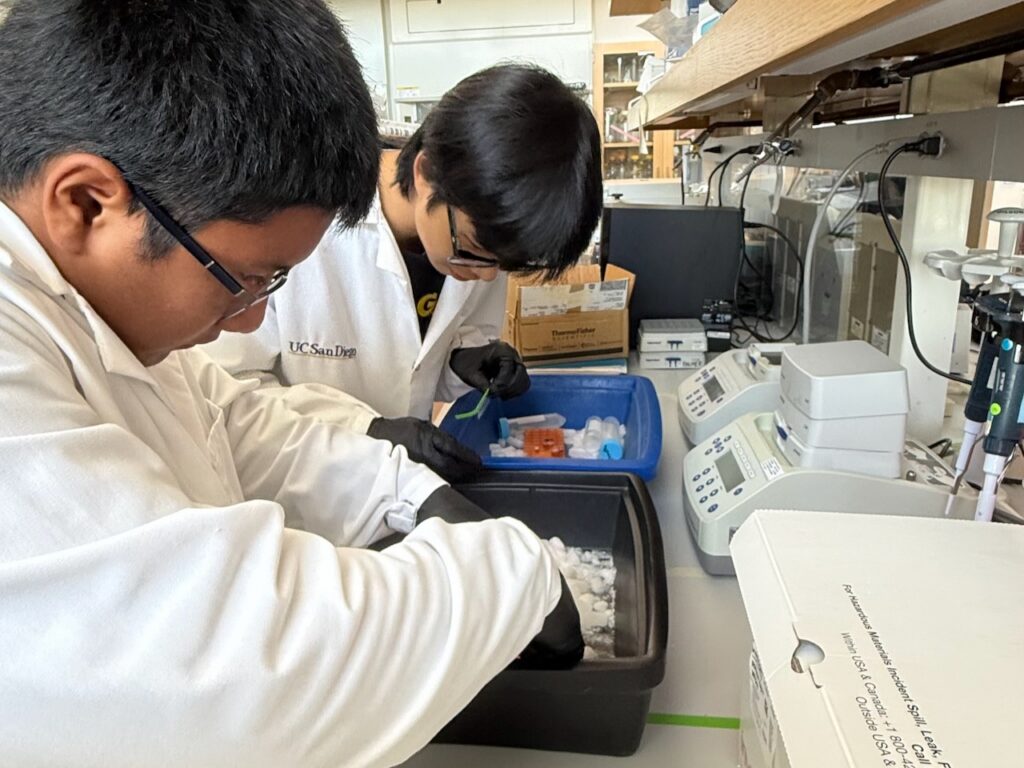
Christopher spent his time in the lab reading journal articles, learning the basics of neuroscience and genetics, and seeing how a research lab works. He participated in a journal club where he presented a paper about a genome-wide association study (GWAS) in Heterogeneous Stock (HS) rats. He also went through a curated neuroanatomy course to prepare him for a handling a rat brain. With a brain that the lab had previously extracted, he performed a full brain dissection, highlighting and documenting key brain regions involved in addiction and behavior. To culminate this experience, he presented what he learned at a symposium for Preuss School research mentees.
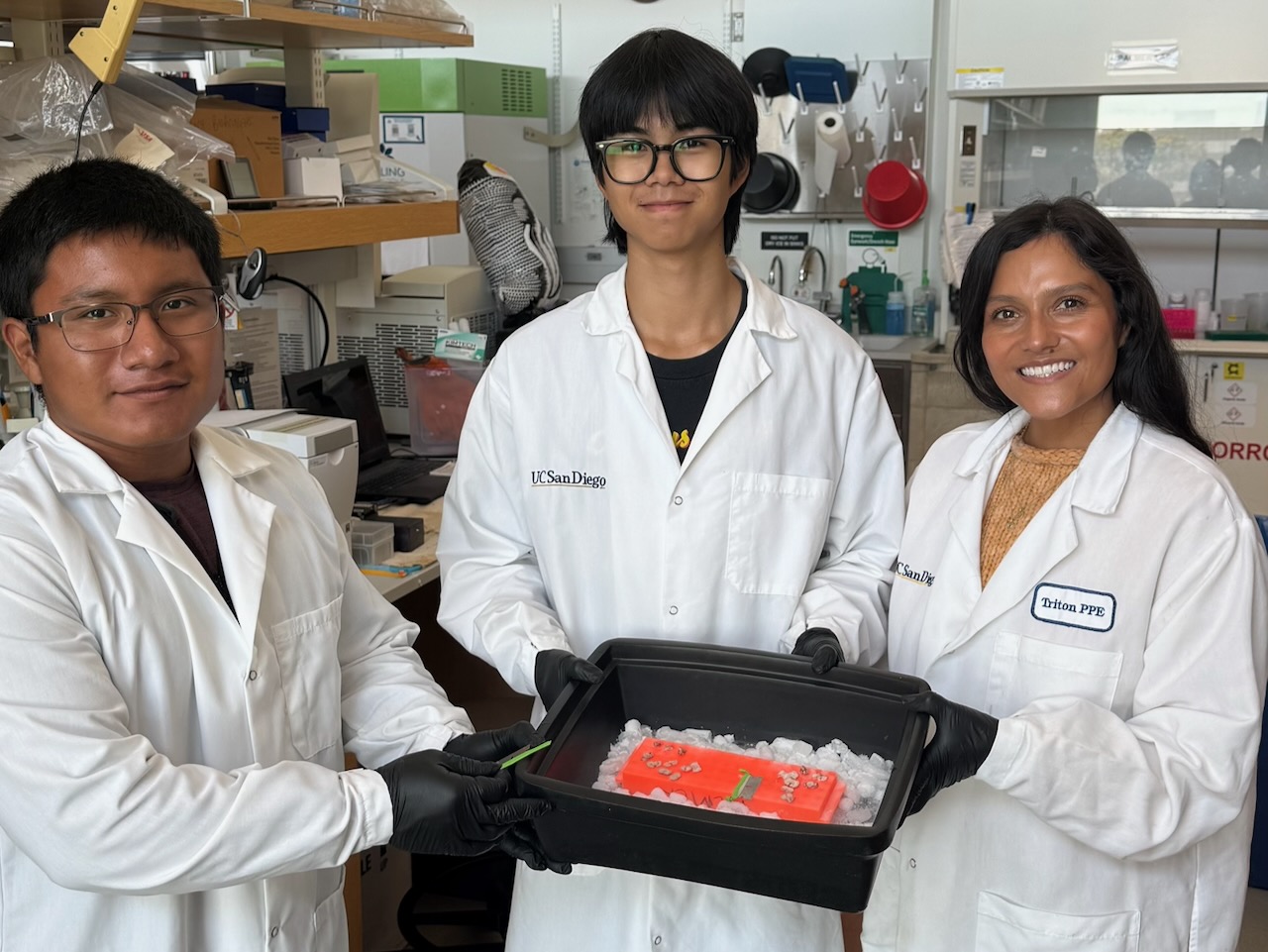
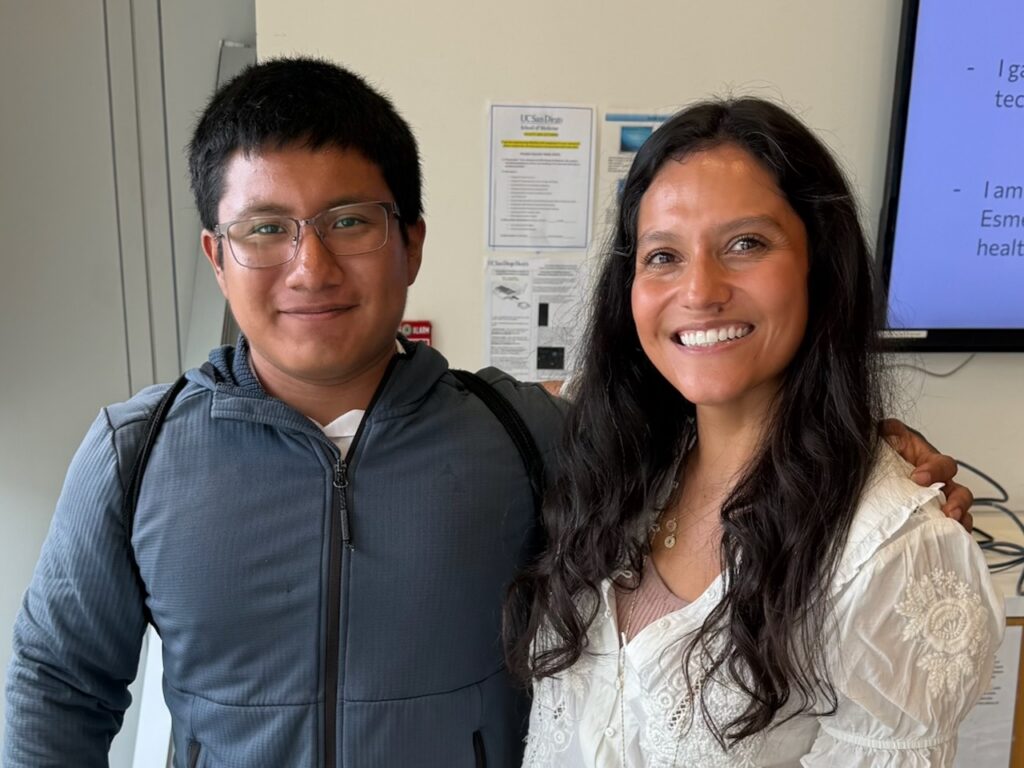
Working in the wet lab (from left): REHU students Christopher and Yeng with mentor Dr. Montana Lara.